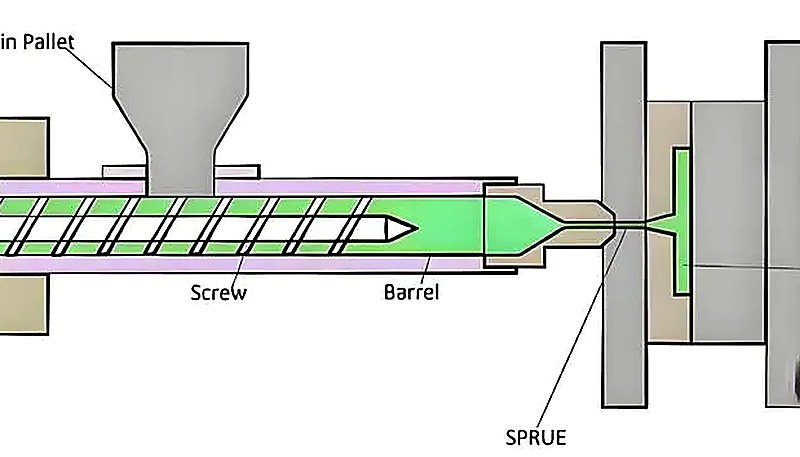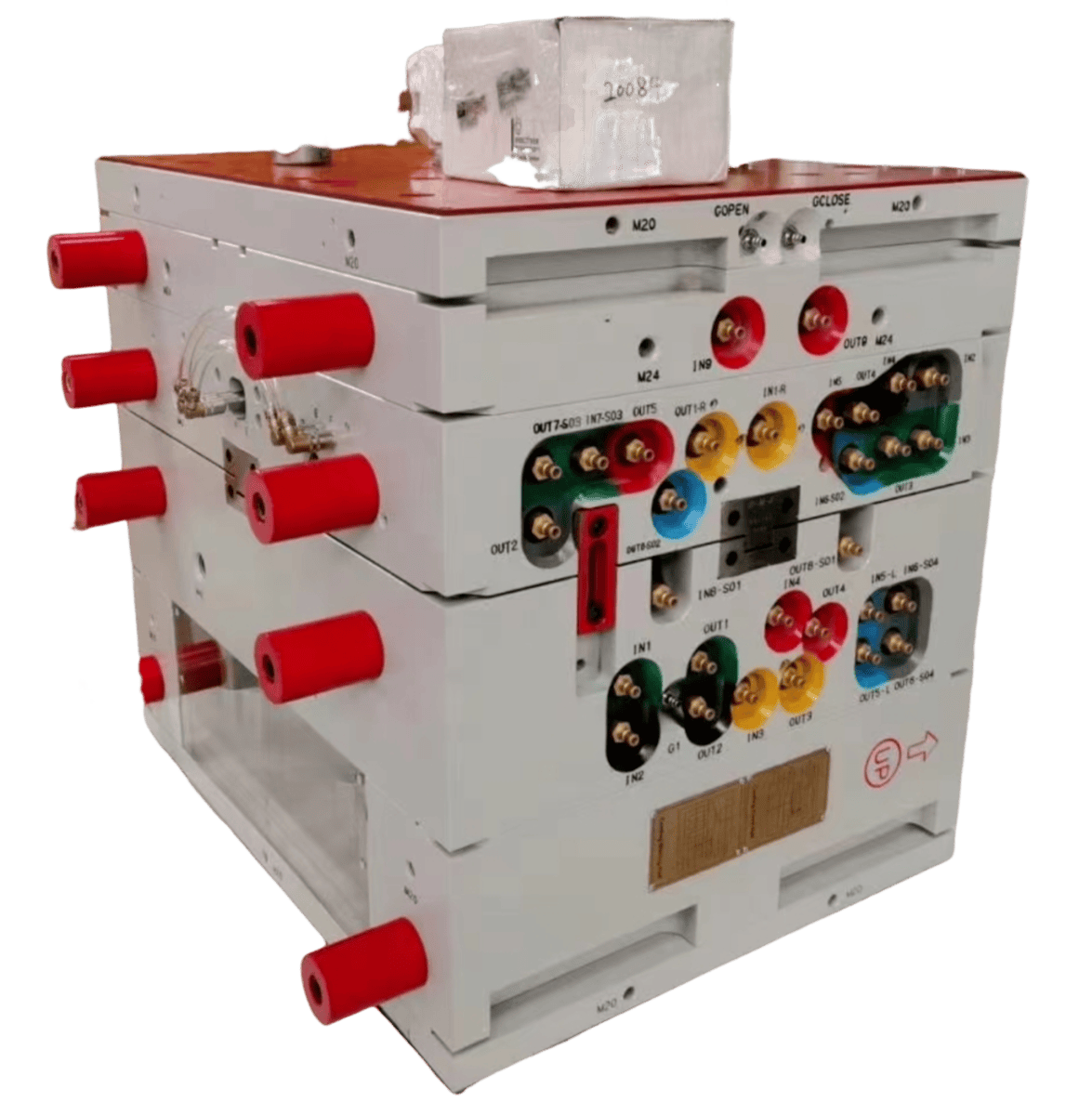
injection molding1 is a widely used manufacturing process for producing plastic2 parts in high volume. Within this field, two main approaches — runner injection molding and runnerless injection molding — differ in how molten resin travels from the machine nozzle into the mold cavity. These two methods vary significantly in tooling cost, material waste, cycle time, and part quality. In this article, I explain both technologies in detail, compare their advantages and disadvantages, and help you decide which approach fits your production needs and budget.
For broader context on sourcing and supplier evaluation, compare this topic with our supplier sourcing guide — it covers how runner and runnerless decisions affect quoted pricing and lead times.
For readers comparing injection molding options, this article connects the injection mold3, plastic material behavior, supplier evaluation, and quality control decisions that determine whether a project can move from design to repeatable production. Understanding these trade-offs early helps avoid costly tooling revisions and production delays.
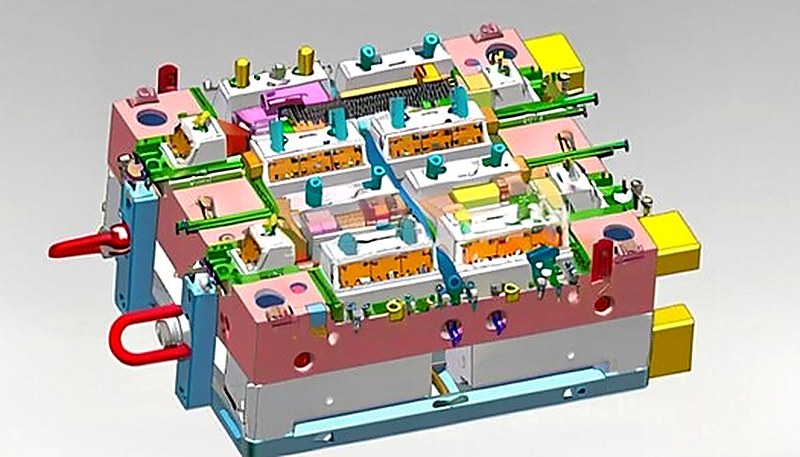
Injection Mold Design
- What is the Difference between Runnerless Injection Molding and Runner Injection Molding? should be judged by mold design, material behavior, process stability, and inspection evidence together.
- A low quote is not enough; buyers should check DFM feedback, tooling risk, lead time, validation records, and supplier response discipline.
- The safest next step is to separate must-have functional requirements from cosmetic preferences before cutting steel or approving production.
What Are the Process Differences Between Runnerless and Runner Injection Molding?
"Choosing between runnerless and runner molding should be evaluated through process stability, mold design, material behavior, and inspection evidence."True
A reliable production decision needs more than a definition; it needs tooling, resin, process window, and quality-control context.
"A low unit price alone is enough to judge an injection molding project."False
Tool life, scrap risk, dimensional drift, supplier response time, and validation records can outweigh a small quoted price difference.
In our Shanghai factory, we run 47 injection molding machines from 90T to 1850T, so we treat every tooling decision as a process-window question, not just a quoted price.
Runnerless Injection Molding
The core difference is simple. Runnerless molding feeds resin through heated nozzles directly into each cavity, while runner molding routes it through an unheated channel that freezes every shot. This one design choice drives everything else.
For a broader view, our injection molding complete guide covers process fundamentals, material behavior, and production decisions.
"Early DFM review reduces mold rework and production surprises."True
Wall thickness, ribs, gates, draft, ejection, cooling, and material selection are cheaper to adjust before steel is cut.
"If a molded part looks acceptable once, the process is automatically production-ready."False
Production readiness requires repeatable cycles, documented inspection, stable material conditions, and clear acceptance criteria.
Runnerless injection molding is a much simpler process than injection molding with runners. It involves feeding, melting, dispensing, filling, packing, cooling, and ejecting the mold. With this method, you can machine very complex and precise parts and still have good production rates and results.
Advantages of Runnerless Injection Molding
Waste Reduction: Because runners are not used in runnerless injection molding, material waste drops significantly, reducing both production cost and environmental impact.
Better Part Quality: Without runners, molten resin reaches each cavity through a heated, temperature-controlled manifold, which reduces flow lines, weld lines, and cold-slug defects. The result is a smoother surface finish and more consistent mechanical properties.
Faster Cycle Times: Without the runner channel to fill and cool, the overall cycle time shrinks. In multi-cavity molds, runnerless systems can reduce cycle time by 15–30% compared to cold-runner equivalents.
Disadvantages of Runnerless Injection Molding
Initial Investment: A hot-runner manifold, nozzles, and temperature controllers add significant upfront cost. For small production runs — say, under 50,000 shots — the capital outlay can be hard to justify compared to a simple cold-runner mold.
Complex Design: Hot-runner systems require specialized engineering: manifold layout, nozzle selection, thermal balance, and gate design all interact. A poorly designed hot runner can cause color-streaking, pressure drop, or freeze-off that negates the supposed advantages.
| Checkpoint 1 area | Checkpoint 1 verification |
|---|---|
| Tooling | Confirm how mold design affects What is the Difference between Runnerless Injection Molding and Runner Injection Molding?. |
| Material | Check resin behavior, shrinkage, heat, and cosmetic risks. |
| Quality | Ask for inspection evidence before production approval. |
Maintenance Requirements: While runnerless molding eliminates the need to separate and regrind cold runners, the hot-runner system itself requires regular maintenance — thermocouple calibration, nozzle tip replacement, and manifold leak checks. A failed heater or seized valve gate can halt production entirely.
Runner Injection Molding
The best thing about RIM, compared to old injection molding, is that it makes sure the plastic is all melted and goes into the mold in the same way, so the parts look right and fit right. It also has some other good things like making parts that are all the same color and shape, and making them faster.
The process of runner injection molding is made up of the following steps: runner design, plastic injection molder making, melt of plastic, injection, filling, compacting, cooling, and demolding. This technology is used to manufacture products in different shapes, sizes and materials so it’s very popular.
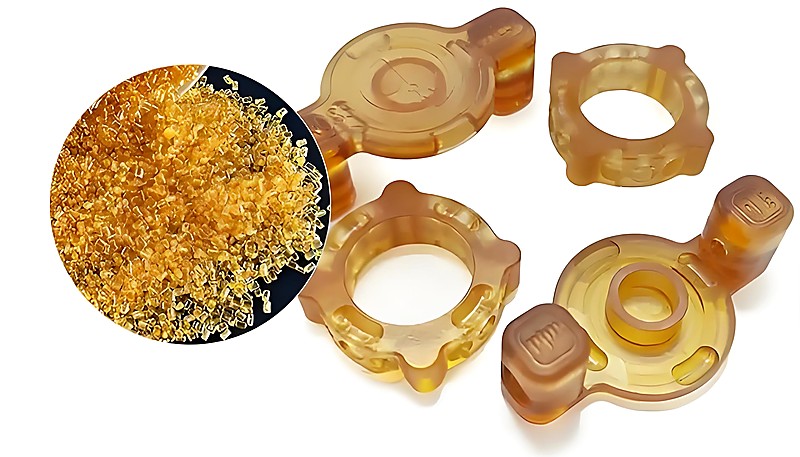
Translucent Plastic Raw Material and Products
Advantages of Runner Injection Molding
Cost-Effectiveness: Cold-runner molds are simpler and cheaper to build. For short to medium production runs, or when the project budget is tight, a runner mold keeps tooling investment low while still producing functional parts.
Flexibility: Cold-runner systems accommodate a wider range of materials, including heat-sensitive and glass-filled resins that may degrade in a hot-runner manifold. Color changes are also faster and cheaper because there is no heated channel to purge.
Simplicity: Cold-runner molds have fewer moving parts, no heaters, and no temperature controllers to tune. This simplicity translates to easier setup, faster mold changes, and lower maintenance costs over the life of the tool.
Disadvantages of Runner Injection Molding
Material Waste: Every shot produces a cold runner that must be separated, reground, and reprocessed — or discarded. For expensive engineering resins, this scrap can add 5–20% to material cost depending on the runner-to-part weight ratio.
Longer Cycle Time: The runner channel adds volume that must be filled, packed, and cooled every cycle. In multi-cavity molds with long runners, this extra cooling time can extend the cycle significantly compared to a hot-runner equivalent.
Post-Processing Labor: Cold runners must be degated or trimmed from every shot, either manually or with robotic separation. This extra handling step adds labor cost and can introduce cosmetic defects if not done carefully.
What Are the Different Applications for Runnerless vs Runner Molding?
Runnerless Injection Molding
Runnerless molding is the better choice for high-volume precision parts, where cycle speed and material savings matter most. Runner molding is preferred when low upfront investment or multi-cavity flexibility is the priority.
Runner Injection Molding
Injection molding is great for manufacturing because it can make products of different sizes and shapes, and it gives the manufacturer control of the temperature and pressure of the plastic during production, which makes it possible to have high-quality and accurate products. It costs more to do, but you have to make the runner, and it’s more for a big industrial process where you’re making a lot of stuff.
How Do Molds for Runnerless and Runner Systems Differ?
The key difference is the feed system. Runnerless molds use heated manifolds to keep resin molten, while runner molds rely on an unheated channel that solidifies each cycle. That choice drives every downstream difference.
Molding Cycle
Runnerless Injection Molding Molds: When calculating the molding cycle, if the cooling time of the gating system is included, the molding cycle is generally 3-8 seconds. If manually taken out, it may take 1-3 seconds longer than mechanical product removal.
Runner Injection Molding Molds: Because there is no cooling time for the gating system, the molded parts can be ejected promptly after solidification. Therefore, many thin-wall parts produced by hot runner molds can be molded in less than 5 seconds.
Material Saving
Runnerless Injection Molding Molds: The cost of raw materials for injection molds is a significant part of the overall cost because cold runners are needed in the molding equipment. This means that the mold will use more material than a hot runner mold to compensate for the scrap generated by the cold runner in the hot runner molding process.
Runner Injection Molding Molds: There are no cold runners at all in a pure hot runner system, so there is no scrap or waste produced. This is the single biggest thing that affects the cost of raw materials. In fact, there was a period of rapid growth for the major hot runner manufacturers around the world when oil and plastic raw material prices were high. With hot runner technology, you can pay less and reduce material waste because the parts will melt quickly and you won’t need extra material.
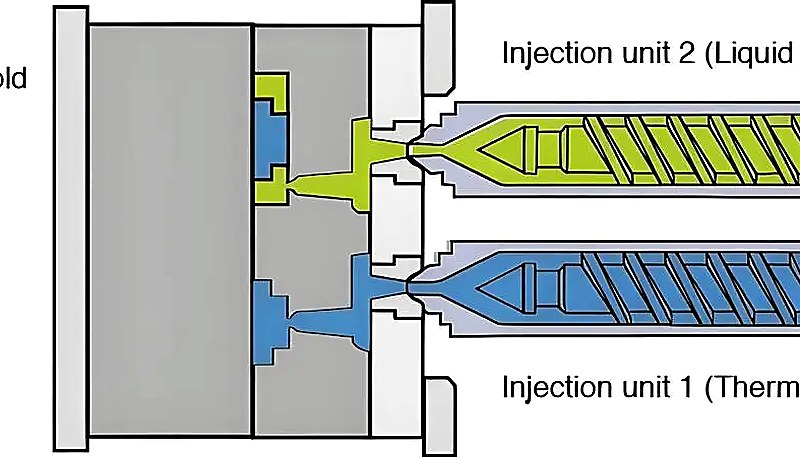
Dual Injection Molding System Schematic
Product Quality
Molds for Injection Molding without Runner: When the resin is not heated as it flows through the mold, there are differences in heating of the resin, so there are parts of the molded product that do not meet the standards, resulting in many defective products. The mold is significantly different from the product mold because of the SS injector, so the quality of the mold is inferior.
Molds for Injection Molding with Runner: In hot runner molds, the plastic flow in the runner system is heated and controlled. The plastic is then cut into each cavity that is being formed. With hot runner technology, the quality is more uniform and there are fewer defective products. In addition, the gate quality of the molded parts is good, the molding stress is low (after demolding), and the deformation of the parts is small.
Subsequent Processes
Runnerless Injection Molding Molds: When you’re running a mold with a mold program, you need to make sure that you have plenty of time to get the parts out. You need to slow down the ejection speed so that the parts have enough time to come off the mold. This will help to prevent burning, spring back, and other problems with the parts sticking in the mold.
Runner Injection Molding Molds: The parts are done when they come out of the hot runner mold. The mold also cuts the sprue and the runner off the parts. The cold runner is the sprue and runner that you throw away. This is the way that the robot makes parts.
Mold Cost
Runnerless Injection Molding Molds: The molds used in the traditional method are priced normally and do not include the cost of installing hot runner components, which is only the cost of calculating process losses. The cost of molding is in good shape.
Runner Injection Molding Molds: Hot runner components are quite expensive. In addition, the cost of hot runner molds can be significantly increased due to design. It is not economically feasible to manufacture parts if the number of parts is small and the cost of mold tools is high.
Equipment Maintenance
Runnerless Injection Molding Molds: Check immediately what needs to be repaired. Find the problem, which may be a leak or a damaged part, and replace it right away.
Runner Injection Molding Molds: Unlike the first type, which is operated mechanically, the second type is difficult to operate and maintain. If you don’t use it correctly, you can damage the parts and people can’t continue to produce, which will cause a lot of economic losses.
How Do You Choose Between Runnerless and Runner Injection Molding?
The right choice is driven by production volume, part complexity, and budget. Runnerless molding is optimal for high-volume precision runs; runner molding is the practical pick for low-volume or budget-constrained projects.
Production Volume: When it comes to parts that have long production runs and require expensive materials and cycle times, runnerless is less expensive in the long run, but has higher upfront costs.
Part Complexity: If you have parts with complex geometries or visual requirements, you might find that the flexibility and precision of runnerless injection molding outweigh the cost difference.
Budget Constraints: Initially, you can make parts with a runner and then, as you get more parts and more money, you can switch to a runnerless system.

Yellow translucent plastic resin pellets
Material Selection: You can make parts with a runner or without a runner using different kinds of plastic. Some plastics flow better, some are thicker, and some change with temperature.
Maintenance Capability: Remember to consider your team’s abilities and the resources you have available to troubleshoot and maintain your molds. This will help you decide whether to use a mold with runners or a runnerless mold.
Which Should You Choose: Runnerless or Runner Injection Molding?
There are two important processes in the injection molding industry: runnerless injection molding and runner injection molding. Each has its own advantages and challenges. With the development of new materials and processing technologies, both processes have broad application prospects and will be more widely used and promoted in the future.
In short, both runner injection molding and runnerless injection molding are good ways to make plastic parts. Each has its own good things and bad things. Runner injection molding is good because it is cheap and you can make all kinds of parts. Runnerless injection molding is good because the parts come out better and you don’t waste as much material. Which one you choose depends on how many parts you want to make, how hard they are to make, and how much money you have.
If you understand the differences between these ways to make parts, you can decide which one is best for you and make the parts you want.
Need a Quote for Your Injection Molding Project?
Get competitive pricing, DFM feedback, and production timeline from ZetarMold’s engineering team.
Request a Free Quote → See our injection mold design for a comprehensive overview.
| Checkpoint 2 area | Checkpoint 2 verification |
|---|---|
| Tooling | Confirm how mold design affects What is the Difference between Runnerless Injection Molding and Runner Injection Molding?. |
| Material | Check resin behavior, shrinkage, heat, and cosmetic risks. |
| Quality | Ask for inspection evidence before production approval. |
For What is the Difference between Runnerless Injection Molding and Runner Injection Molding?, the safest buyer decision starts by separating functional requirements from cosmetic expectations. Critical dimensions, resin behavior, surface zones, assembly interfaces, annual volume, packaging, and inspection criteria should be visible before tooling or production assumptions are approved.
A practical supplier review should connect the drawing to mold construction, process stability, and quality evidence. Gate location, cooling layout, venting, ejection, steel selection, and trial records all influence whether a plastic part can repeat within tolerance after the first acceptable sample.
Before an RFQ is treated as final, buyers should ask which assumptions drive cost and lead time. Cavity count, runner design, material availability, measurement method, sample approval rules, and change-control expectations can affect total project risk as much as the quoted unit price.
The strongest evidence is specific and repeatable: DFM feedback, molding trial notes, first-article inspection, corrective-action history, and a clear path from sample review to production release. Those details make the page more useful for buyers and more reliable for answer engines.
Frequently Asked Questions
Frequently Asked Questions
What is the most important decision when choosing between runnerless and runner molding?
The most important decision is whether your production volume justifies the higher upfront tooling cost of a hot runner system. If you plan to run millions of shots with an engineering-grade resin, the material savings and cycle-time gains of runnerless molding usually pay back the investment within the first year. For short runs or prototype bridge tooling, a cold runner mold keeps capital risk low while still delivering acceptable part quality. Match the feed system to your annual volume, resin cost, and quality tolerance before committing to either approach.
How should buyers evaluate runnerless vs runner injection molding?
Buyers should evaluate three things beyond the quoted unit price: tooling complexity, material waste rate, and maintenance burden. Ask the supplier for a side-by-side cost model that includes runner scrap, regrind allowances, cycle-time estimates, and hot-runner component replacement intervals. A supplier who can explain the trade-offs clearly — rather than just recommending the more expensive option — is more likely to deliver stable production over the life of the tool. Review DFM feedback, mold-flow analysis, and trial records before approving the feed system for production.
When does a runnerless vs runner project require supplier review?
Any project above 500,000 annual shots, or any part with tight cosmetic or dimensional tolerances, should involve the supplier in a detailed mold-flow analysis before the feed system is finalized. Hot runner systems introduce thermal management complexity that can cause color streaking, gate vestige, or pressure imbalance if not designed correctly. A supplier with in-house tooling capability can run mold-flow simulations and provide DFM feedback that directly addresses runner vs runnerless trade-offs for your specific geometry and resin. Request trial reports and first-article data before committing to production tooling.
Why does mold design matter for runnerless and runner systems?
Mold design determines how resin flows, cools, and packs in every cavity. In a runnerless system, the manifold layout, nozzle type, and gate location directly affect fill balance, pressure drop, and color-change efficiency. In a cold runner system, the runner diameter, length, and layout control material waste, fill time, and post-mold trimming requirements. The wrong feed-system design can cause sink marks, short shots, or dimensional drift that no amount of process tuning will fix. Work with your mold builder to simulate both options before cutting steel.
How can ZetarMold support your runnerless or runner molding project?
ZetarMold operates 47 injection molding machines from 90T to 1850T in our Shanghai factory, with an in-house mold manufacturing facility that supports over 100 mold sets per month. Our engineering team uses SOLIDWORKS and MOLDFLOW for mold-flow analysis and DFM review, so we can recommend the right feed system based on your part geometry, resin, volume, and budget. We provide detailed trial reports, first-article inspection data, and corrective-action records to support your production qualification from first shot to volume release.
injection molding: injection molding refers to is the production process that melts plastic, injects it into a mold cavity, cools the part, and repeats the cycle for stable volume manufacturing. ↩
plastic: Plastic is a material family whose flow, shrinkage, strength, heat resistance, cosmetic quality, cycle time, and long-term performance shape molding decisions. ↩
injection mold: injection mold refers to an injection mold is the precision tool that defines part geometry, cooling behavior, ejection, gating, surface finish, and repeatability. ↩