Your injection molding supplier choice determines whether your product launches on schedule or stalls for months. See our injection molding guide and mold design reference.
This comprehensive sourcing guide covers everything from understanding true costs and writing effective RFQs to vetting suppliers, protecting your intellectual property, and calculating total cost of ownership. Whether you are sourcing from China for the first time or optimizing an existing supply chain, the frameworks and checklists here will help you make better decisions faster.
- Total cost matters more than unit price — factor in tooling, shipping, tariffs, quality rejects, and communication overhead when comparing suppliers
- A structured RFQ reduces back-and-forth by 60% — include material specs, tolerances, volumes, and timeline upfront
- Always register IP before sharing designs — file CNIPA design patents and use bilingual NDAs with penalty clauses for China sourcing
- Vet suppliers through a 7-step process — certifications, facility audit, equipment check, quality system, references, sample evaluation, and communication test
- Mold ownership must be in writing — define legal title, storage, transfer rights, and modification rights before placing the order
- Use a hybrid sourcing strategy — leverage China for cost-effective volume production and domestic suppliers for fast-turnaround, regulated, or low-volume work
Understanding these distinctions is essential for anyone involved in sourcing decisions for injection molded components. The following sections provide detailed frameworks for evaluating suppliers, comparing costs, and structuring agreements that protect your interests throughout the manufacturing relationship.
Whether you are a procurement specialist, product engineer, or business owner, these actionable guidelines will help you navigate the complexities of global injection molding supply chains with greater confidence and precision.
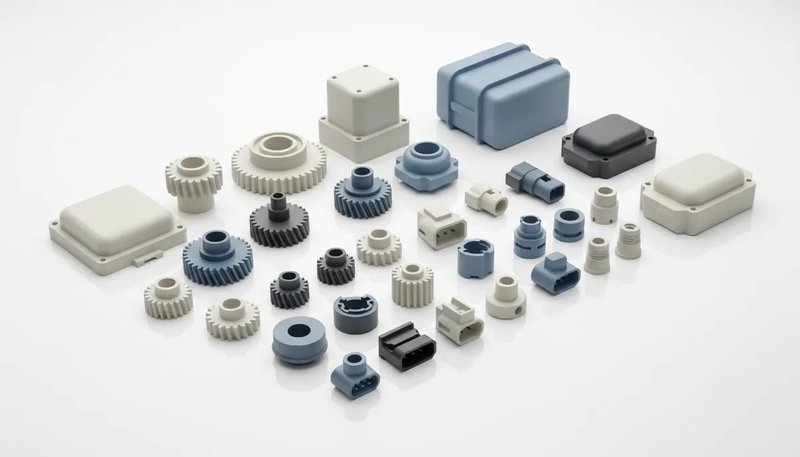
Injection molded parts — geometry and volume.
1. Tooling (Mold Fabrication)
Tooling is almost always the largest upfront investment. A single-cavity aluminum mold for a simple bracket runs $1,500–$3,500. A multi-cavity steel production mold for a complex housing can reach $25,000–$80,000+. The key variables are:
- Cavity count — doubling cavities roughly adds 40–60% to mold cost but cuts piece price by 30–50%.
- Steel grade — P20 (standard) vs. H13 (high-polish, long-life); see our P20 vs H13 vs S136 comparison for details. H13 adds 20–35% but lasts 3–5× more shots.
- Side actions & lifters — each undercut feature adds $800–$2,500 in tooling complexity.
- Surface finish — SPI A-1 mirror polish can add $3,000–$8,000 vs. a standard VDI 24 texture.
Tooling is a one-time cost amortized over the production run. At 100,000 units, a $20,000 mold adds only $0.20 per part — often negligible compared to material and processing.
2. Per-Part (Processing) Cost
This covers machine time, labor, and factory overhead baked into the unit price. Typical ranges:
- Small simple parts (< 30 g, no inserts): $0.05–$0.35 per piece.
- Medium complexity (inserts, secondary ops): $0.30–$1.50 per piece.
- Large / high-precision (over 500 g, tight tolerances): $1.50–$6.00+ per piece.
Cycle time is the biggest lever. A part that cycles in 12 seconds costs roughly half to produce versus the same geometry cycling at 24 seconds — machine hourly rates in China average $8–$18/hr versus $30–$65/hr in the US.
3. Raw Material
Resin typically accounts for 20–40% of total part cost. Commodity grades like PP or HDPE sit at $0.90–$1.30/lb, while engineering resins (POM, PC, PA66-GF30) range from $1.80–$4.50/lb. High-performance materials like PEEK or PPSU can exceed $25/lb. Material price also depends on:
- Virgin vs. regrind ratio — regrind cuts resin cost 30–50% but may affect mechanical properties.
- Color & additives — custom color matching adds $0.10–$0.40/lb; UV stabilizers or flame retardants add $0.50–$2.00/lb.
- Buy volume — purchasing resin in 1,000 kg lots vs. 25 kg bags can yield 10–18% savings.
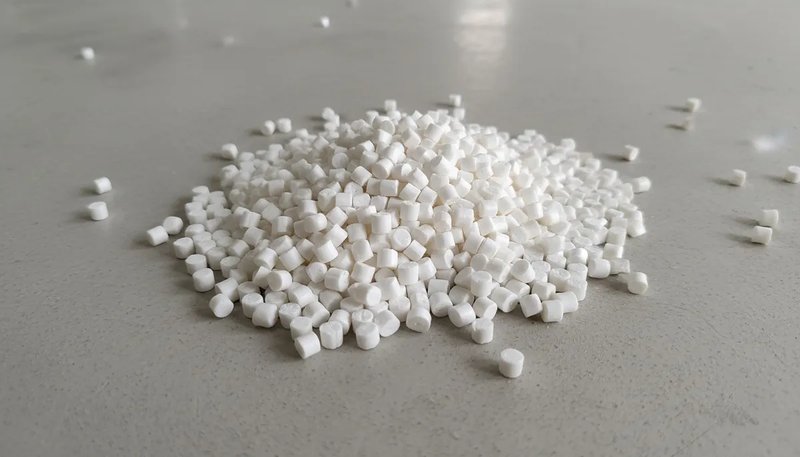
Resin pellets — raw material for molding.
4. Shipping & Logistics
Freight is the silent budget killer. Ocean freight from Shenzhen to Los Angeles for a standard 20 ft container currently runs $1,800–$3,500 (2026 spot rates). Air freight for urgent batches jumps to $3.50–$5.50/kg. Key considerations:
- Dimensional weight — bulky, low-density parts can cost more to ship than to mold.
- Incoterms — FOB vs. DDP shifts $500–$2,500+ in local charges per shipment.
- Warehousing — buffer stock in a US 3PL runs $0.50–$1.50/cubic ft/month.
5. Tariffs & Duties
As of 2026, most Chinese-manufactured plastic articles (HTS 3926) carry a 7.5–25% tariff depending on the specific classification and any active trade remedies. Add the standard 0.346% Merchandise Processing Fee, and the landed cost premium is real. Some categories — like certain automotive components — face additional Section 301 duties, pushing effective rates above 25%.
Cost Breakdown Summary
| Cost Category | Typical Range | % of Total Landed Cost | Key Variables |
|---|---|---|---|
| Tooling (Mold) | $1,500 – $80,000 | 5–15% (amortized) | Cavity count, steel grade, surface finish |
| Per-Part (Processing) | $0.05 – $6.00/unit | 25–40% | Cycle time, machine rate, labor cost |
| Raw Material | $0.90 – $4.50/lb | 20–40% | Resin grade, virgin/regrind, additives |
| Shipping & Logistics | $1,800 – $3,500/container | 10–20% | Mode (ocean vs. air), volume, Incoterms |
| Tariffs & Duties | 7.5 – 25% of declared value | 5–15% | HTS code, country of origin, trade policy |
Hidden Costs Most Buyers Miss
Beyond the five core categories, three hidden costs routinely blow up budgets:
- Mold modifications — first-article design changes cost $500–$5,000 per revision depending on complexity. Budget for at least one T1 sampling revision.
- Sampling & validation — T0/T1 sample runs, dimensional reports (FAI), and material certificates add $300–$1,500 per sampling round.
- Quality rejects & rework — a 2–3% reject rate is typical in early production. At $2.00/unit on a 50,000-piece order, that is $2,000–$3,000 in scrapped material alone.
The takeaway: never compare suppliers on piece price alone. A factory quoting $0.55/part with a 5% reject rate — see our injection molding defects guide for common failure modes — is more expensive than one quoting $0.60/part with a 0.5% rate. Always model the full injection molding cost breakdown — tooling amortization, material, processing, freight, tariffs, and quality — before signing a purchase order.
How to Write an Effective RFQ for Injection Molding
A well-structured injection molding RFQ template is the foundation of every successful sourcing project. The quality of the quotes you receive is directly proportional to the quality of the information you provide. Vague or incomplete RFQs lead to inaccurate pricing, long email threads, and wasted weeks — problems that compound when you are comparing multiple suppliers across different countries.
“A structured 8-step sourcing process measurably reduces costly first-article failures.”True
Buyers who follow a defined sourcing framework — from requirement documentation through pilot validation — consistently report fewer design iterations, faster T1 approvals, and lower total rework costs compared to ad-hoc supplier selection. The key is front-loading specification work before the first RFQ is sent.
“A basic email with part dimensions is sufficient to receive meaningful injection molding quotes.”False
Suppliers who receive incomplete RFQs are forced to make assumptions about material grade, tolerances, volume, and surface finish — resulting in quotes that can differ by 200–400% from each other. A thorough 10-element RFQ is the only way to compare suppliers on a genuinely level playing field and avoid costly re-quoting cycles mid-project.
The 10 Essential Elements Every RFQ Must Include
Whether you are quoting a single prototype mold or a high-volume production run, your RFQ should cover these ten critical elements:
| # | RFQ Element | Why It Matters |
|---|---|---|
| 1 | Part Geometry & CAD Files | 3D files (STEP/IGES) allow the supplier to assess mold complexity, undercuts, and parting lines accurately. |
| 2 | Material Specification | Specify the resin by grade (e.g., ABS PA-747, PC Lexan 141R), not just the polymer family. Different grades have vastly different shrink rates and costs. |
| 3 | Annual Volume & Order Quantity | Volume determines the number of cavities, mold steel grade, and whether a production mold or prototype tool is appropriate. |
| 4 | Dimensional Tolerances | General tolerance (±0.1 mm) vs. tight tolerance (±0.02 mm) can double mold cost. Specify exactly which dimensions are critical. |
| 5 | Surface Finish Requirements | SPI finish standards (A-1 polished to D-3 textured) affect machining time. Include a physical sample or photo reference when possible. |
Continued: Secondary specifications that must be part of every RFQ submission.
| # | RFQ Element | Why It Matters |
|---|---|---|
| 6 | Color & Appearance | Pantone or RAL color code, masterbatch vs. pre-colored resin, and whether color matching across cavities is required. |
| 7 | Assembly & Secondary Operations | Ultrasonic welding, pad printing, EMI shielding, or insert molding should be quoted upfront — not added as change orders later. |
| 8 | Quality & Regulatory Standards | ISO 9001, IATF 16949 (automotive), FDA USP Class VI (medical), or UL 94 flammability ratings affect both material selection and inspection protocols. |
| 9 | Timeline & Milestones | T1 sample delivery, mold approval (T3/T5), and first production shipment dates help the supplier schedule workshop capacity. |
| 10 | Delivery Terms & Packaging | Incoterms (FOB, DDP), packaging method (bulk bags, individual boxes, tray-packed), and destination address for landed-cost accuracy. |
Common RFQ Mistakes That Cost You Time and Money
After reviewing thousands of RFQs from buyers, three recurring mistakes stand out:
- Missing or inconsistent tolerances. Many buyers simply write “standard tolerances” without defining what that means. Without specific GD&T callouts on critical dimensions, suppliers default to their internal standards — which may not match your assembly requirements. The result: parts that pass the supplier’s inspection but fail at your end.
- Vague material specifications. Writing “ABS” or “nylon” is not enough. Different grades within the same polymer family can vary in cost by 40% or more. Always specify the manufacturer and grade, or at minimum the key performance properties (tensile strength, impact resistance, heat deflection temperature).
- No volume range or production schedule. Suppliers need to know whether you are ordering 500 pieces once or 500,000 pieces per year for three years. Without this context, they cannot optimize the mold design for the right balance of cost and longevity.
Simplified RFQ Template Structure

Design consultation during the RFQ process.
Use this framework as a starting point for your next injection molding RFQ:
- Project Overview — Company name, project code, NDA status, target market
- Part Information — Part name, CAD file format, weight estimate, number of parts per assembly
- Material — Resin grade, color code, recycled content allowed (yes/no), regulatory requirements
- Volume — Prototype quantity, initial order quantity, annual forecast, multi-year projection
- Technical Specs — Tolerances (general + critical dimensions), surface finish (SPI grade), assembly requirements
- Quality — Inspection standard (AQL level), CMM report required, PPAP/IQOQ level
- Logistics — Incoterms, destination port/address, packaging requirements, shipping frequency
- Timeline — RFQ response deadline, T1 sample target, production start date
A complete RFQ does not guarantee the lowest price, but it does guarantee comparable quotes. When every supplier receives the same detailed specification, you can evaluate pricing on a level playing field and identify the true cost drivers in your project. Take the time to build a thorough RFQ once, and you will save weeks of back-and-forth across every future project.
China vs Domestic Manufacturing: Total Cost Analysis
One of the most consequential decisions in any injection molding project is where to manufacture. The China vs domestic injection molding cost debate is not simply about unit price — it is about total landed cost, risk exposure, and strategic fit. This section breaks down the real numbers so you can make a data-driven call.
Head-to-Head Cost Comparison
The table below summarizes typical cost ranges for a mid-complexity mold (e.g., a 4-cavity mold for an ABS enclosure, ~200 g part weight, annual volume 50,000 units).
| Cost Factor | China | US / Western Europe |
|---|---|---|
| Tooling (mold) | $5,000 – $15,000 | $15,000 – $50,000 |
| Part price (per unit) | $0.30 – $1.20 | $1.50 – $4.00 |
| Shipping (ocean, per unit) | $0.05 – $0.20 | $0.00 (domestic) |
| Tariff / duty (25%) | $0.08 – $0.30 | $0.00 |
| Lead time (first articles) | 8 – 14 weeks | 4 – 8 weeks |
| MOQ | 1,000 – 5,000 units | 100 – 1,000 units |
| Design iteration cycle | 5 – 10 days per round | 2 – 5 days per round |
At first glance, China wins on tooling and per-part pricing. A $5,000 mold versus a $30,000 domestic mold is hard to ignore. But the gap narrows — and can invert — once you factor in the full picture.
Hidden Costs of Going Cheap
The sticker price rarely tells the whole story. Here are the costs that do not appear on a quotation but show up on your P&L:
- Quality rejects and rework. A 3–5% defect rate is common with lower-tier Chinese suppliers. At scale, that is thousands of unusable parts. One medical device company saw a 7% reject rate on a critical housing component — the replacement run, expedited shipping, and assembly-line downtime cost more than the entire initial savings on tooling.
- Communication overhead. Time-zone gaps of 12+ hours, language barriers, and cultural differences in engineering tolerance interpretation add 10–20 hours per project in back-and-forth. At $75–$150/hr fully loaded engineering cost, that is $750–$3,000 in invisible labor per project.
- IP risk. Enforcing patents and trade secrets across jurisdictions is expensive and slow. If your part design is easily reverse-engineered, manufacturing it in a region with weaker IP enforcement carries real commercial risk.
- Tariff volatility. US-China tariffs have fluctuated between 0% and 25%+ since 2018. Budgeting at today’s rate is optimistic; a policy shift can wipe out your margin overnight.
- Inventory carrying cost. Longer lead times and higher MOQs mean larger safety stocks. Warehousing $20,000–$50,000 of excess inventory ties up working capital that could be deployed elsewhere.

Real cost breakdown — China vs. domestic sourcing.
When Domestic Manufacturing Makes Sense
Offshore manufacturing is not universally superior. Domestic production is the smarter choice in several well-defined scenarios:
- Low to medium volume. If your annual requirement is under 5,000 units, the tooling savings from China may not offset the higher MOQs, shipping costs, and inventory carrying burden. Domestic molders often accept runs as low as 100–500 units.
- Tight tolerances and critical dimensions. Parts with tolerances tighter than ±0.005 in (±0.127 mm) or critical cosmetic finishes (SPI A-1, Class 101 molds) benefit from close collaboration with the tooling shop.
- Regulated industries. Medical devices (FDA 21 CFR Part 820), aerospace (AS9100), and automotive (IATF 16949) parts often require full traceability, validated processes, and audit access. Domestic suppliers make compliance audits straightforward; overseas audits are possible but cost $3,000–$8,000 per trip.
- Fast iteration and time-to-market. If your product is still evolving, the 2–3 week iteration cycles of a domestic shop beat the 5–10 week cycles typical of offshore production. Getting to market two months sooner often generates more revenue than the tooling savings.
A Hybrid Approach
Many experienced sourcing professionals use a split strategy: prototype and early production domestically, then transfer the mold to China for high-volume runs once the design is locked. This gives you speed and control when it matters most, and cost efficiency at scale. Just make sure your contract includes clear mold ownership terms — covered in detail in Section 7.
The Decision Framework
Use this quick heuristic:
- Annual volume > 50K, stable design, non-regulated → China is likely the lower total cost.
- Annual volume < 10K, design still iterating, regulated → Domestic is likely the better fit.
- 10K–50K, mixed requirements → Run the full TCO model (see Section 11).
The right answer is not “always China” or “always domestic.” It is the one that minimizes your total cost of ownership while satisfying your quality, timeline, and compliance requirements.
How to Vet an Injection Molding Supplier
Choosing the wrong injection molding supplier can cost you months of delays, thousands in scrapped parts, and even legal liability. Whether you are sourcing from a local shop or a factory overseas, a structured vetting process separates reliable partners from expensive mistakes. Here is a proven seven-step framework to vet an injection molding supplier before you sign a contract.
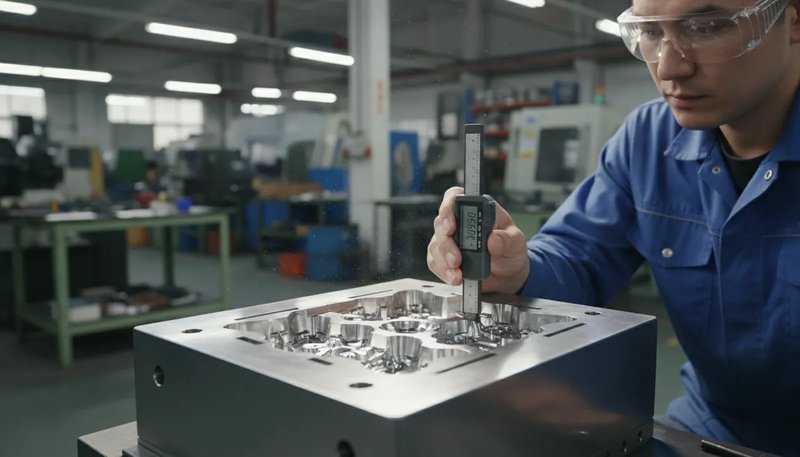
Mold tooling inspection during supplier vetting.
Step 1: Verify Certifications
Certifications are the fastest initial filter. Ask the supplier for current certificates — do not accept scanned copies without checking expiry dates and issuing bodies. The key certifications to look for include:
- ISO 9001 – The baseline quality management standard. Any legitimate mold shop should hold this.
- IATF 16949 – Required if you produce automotive parts. This standard adds PPAP, FMEA, and statistical process control to the ISO 9001 framework.
- ISO 13485 – Mandatory for medical device components. It demands traceability, risk management, and cleanroom documentation.
- UL Listing / RoHS / REACH – Relevant for electrical enclosures, consumer electronics, and any product sold in the EU.
If a supplier claims certification but cannot produce the certificate number or registrar name, treat that as a red flag.
Step 2: Conduct a Facility Audit
A physical audit — either in person or via a live video walkthrough — reveals what certificates cannot. Walk the production floor and check for organized tool storage, labeled material silos, calibrated measurement equipment, and clean work-in-progress areas. For overseas suppliers, hire a third-party inspection firm (such as SGS, Bureau Veritas, or TÜV Rheinland) if you cannot travel. A factory that refuses an audit is a factory that has something to hide.
Step 3: Inspect Equipment and Capabilities
Match the supplier’s machine park to your part requirements. Confirm tonnage range (e.g., 50–1,200 tons), number of cavities they can tool, and whether they support multi-material or insert molding. Ask about machine age and maintenance schedules — a shop running 20-year-old presses without a preventive maintenance plan will deliver inconsistent cycle times and dimensional drift.
Step 4: Evaluate the Quality Management System
Beyond the certificate on the wall, dig into the actual quality management system. Request a copy of their inspection plan template, incoming material verification procedure, and in-process monitoring records. Ask how they handle non-conforming material and what their corrective-action turnaround time is. A supplier that tracks scrap rate, first-pass yield, and on-time delivery in a dashboard is more likely to maintain consistent quality than one relying on paper logs.
Step 5: Check References and Track Record
Ask for two or three references in your industry — companies of similar size and part complexity. Call them. Ask about lead-time accuracy, communication responsiveness, and whether the supplier proactively flagged problems or hid them. A strong reference from a company making medical housings means far more than a generic testimonial on the supplier’s website.
Step 6: Request and Evaluate Samples
Before committing to production tooling, order prototype or T0 samples. Measure critical dimensions yourself using CMM data or go/no-go gauges. Compare surface finish, flash, and sink marks against your drawings. Sample quality is the single most reliable predictor of production quality.
Step 7: Test Communication and Responsiveness
Send a technical inquiry — a tolerance question or a material substitution request — and measure response time, clarity, and technical depth. A supplier that replies in 24 hours with a detailed answer is easier to work with than one that takes four days to say “we will check.” Poor communication during the sales process only gets worse after you place an order.
Factory Experience: What a Walkthrough Reveals During a pre-qualification visit to a potential subcontractor, I noticed their material silos were unlabeled and their CMM had a calibration sticker expired 14 months prior. We declined to partner. Three months later, that factory lost a major automotive client over a material-contamination recall. A 90-minute floor walk tells you more about a supplier’s real quality culture than any certificate wall ever will.
Red Flags to Watch For
- No verifiable physical address – A P.O. box or residential address suggests a trading company, not a factory.
- No quality lab on site – Without calipers, CMM, or optical comparators, the supplier cannot confirm part quality.
- Refuses factory visits or third-party audits – There is no legitimate reason to deny access.
- No customer references – Every established molder has clients willing to vouch for them.
Supplier Audit Quick-Reference Checklist
| Audit Item | What to Check | Pass / Fail |
|---|---|---|
| Certifications | ISO 9001, IATF 16949, ISO 13485 (as applicable); verify with registrar | |
| Facility Condition | Clean floor, organized tool storage, safety signage | |
| Equipment | Press tonnage, machine age, maintenance log | |
| Quality Lab | CMM, calipers, optical comparator, gauge calibration records | |
| Material Control | Labeled silos, certificate of analysis, lot traceability | |
| Process Documentation | WI/SOP for each process, control plan, PFMEA | |
| Non-Conformance Handling | CAPA log, segregation area, rework procedure | |
| References | 2–3 industry-relevant contacts willing to speak |
Following this seven-step vetting process takes effort upfront, but it prevents far more expensive problems down the line. A thoroughly vetted supplier becomes a long-term partner; an unvetted one becomes a recurring headache.
ZetarMold’s ISO 9001 facility operates 45 injection molding machines ranging from 80 to 1,200 tons. Our in-house CMM lab performs first-article inspections on every new program, and our average first-pass yield on production parts exceeds 98.5%. We invite every prospective buyer to tour our facility — no staged walk-throughs, full floor access.
NDA and IP Protection When Outsourcing
Sharing your CAD files, mold designs, and manufacturing know-how with an overseas supplier is one of the riskiest moments in injection molding sourcing. Without a robust injection molding NDA IP protection strategy, your proprietary designs can be copied or sold to competitors within weeks. This section covers what a legally enforceable NDA must contain, the China-specific IP landscape, and the most common mistakes that leave buyers exposed.
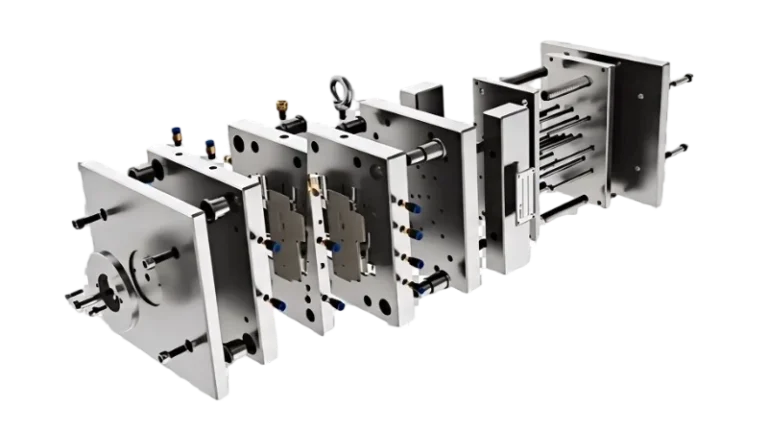
Exploded mold view — protect designs with an NDA.
Six Elements Every Injection Molding NDA Must Include
A vague confidentiality promise is not enough. Your NDA should explicitly address these six components:
- Scope of Confidential Information. Define exactly what is covered: CAD files, mold designs, material formulations, process parameters, and pricing. The vaguer the definition, the harder it is to enforce.
- Duration. Specify how long confidentiality obligations last. Two to five years is standard for tooling-related NDAs, but trade-secret protections should have no expiration.
- Jurisdiction and Governing Law. State which country’s laws apply and which courts have jurisdiction. For China-based suppliers, this should reference Chinese law and Chinese courts — foreign judgments are rarely enforceable in China.
- Remedy and Penalty Clause. Include liquidated damages for breach. Without a pre-agreed penalty, you will spend years litigating. A specific monetary figure (e.g., $50,000 per violation) creates a real deterrent.
- Definition of Intellectual Property. Explicitly list patents, utility models, industrial designs, copyrights, and trade secrets. This prevents the supplier from claiming a category was not covered.
- Return or Destruction of Materials. Require the supplier to return or certify destruction of all files, molds, and samples after the agreement ends, with written confirmation.
China-Specific IP Considerations
China operates on a first-to-file patent system — the first entity to register owns the rights, regardless of who invented it. If you share unprotected designs with a Chinese factory, they can file patents on your work before you do.
- CNIPA Design Patents. File design patents with the China National Intellectual Property Administration before sharing any CAD files. Design patents in China cost $500–$1,500 and are often granted within 6 months, per CNIPA filing guidelines1
- Utility Model Patents. For functional innovations (a unique snap-fit mechanism, a novel core-pull system), file a utility model. These are not substantively examined, making them faster to obtain and useful as a defensive tool.
- Enforcement Reality. Winning an IP case in China is possible, but enforcement remains inconsistent. Specialized IP courts in Shenzhen, Shanghai, and Beijing are more reliable than local courts.
- Record with Customs. China Customs can seize infringing exports if your trademarks or patents are recorded with them. This is an underused but effective enforcement channel.
Common NDA Mistakes That Expose Your Designs
- Too broad or too narrow. An NDA that covers “all business information” is too vague. One that covers only specific named files is too narrow to protect derivative designs.
- No penalty clause. Without liquidated damages, the supplier’s risk is limited to a court-determined figure years later — often negligible.
- Wrong jurisdiction. Specifying US courts for a Chinese supplier is practically useless — Chinese courts do not enforce most foreign civil judgments.
- Missing bilingual version. Chinese courts require Chinese-language documents. Your NDA should be bilingual, with a clause stating that the Chinese version controls in case of discrepancy.
Practical Recommendations
- Register before you share. File CNIPA design patents for every product you plan to manufacture in China before sending CAD files to any supplier.
- Use escrow for mold designs. Place detailed mold designs in a secure escrow service. The supplier receives only what is necessary for manufacturing — not the full engineering package.
- Stamp all shared files. Add a visible watermark reading “CONFIDENTIAL — Property of [Company] — Shared under NDA dated [Date]” on every drawing and CAD export.
- Layer your protections. An NDA alone is insufficient. Combine it with registered IP, contract clauses, and operational controls (stamping, escrow, segmented information sharing) for defense in depth.
Injection molding NDA IP protection is not a single document — it is a system of legal, procedural, and technical safeguards. The cost of filing patents and drafting a proper bilingual NDA is trivial compared to discovering your product sold by a factory you never contracted with.
Payment Terms and Mold Ownership Agreements
Factory Experience: The $47,000 Mold Dispute We once received a tool transfer request from a buyer whose previous supplier refused to release molds worth $47,000 — because the original purchase order said nothing about mold ownership. The buyer spent nine months in mediation. Since witnessing that case, we proactively include a mold ownership addendum in every tooling contract we sign, specifying legal title, storage location, transfer window, and the right to retrieve molds with 30 days’ notice.
Money and ownership are the two fault lines that break more buyer-supplier relationships than any quality issue. Get the payment structure wrong, and cash flow strangles your project. Leave mold ownership vague, and a dispute can lock you out of your own tooling for months. This section covers the payment schedules most injection molders actually accept, and the contract clauses that keep your molds firmly in your hands.
Common Payment Structures in Injection Molding
-
30/30/40 — The Balanced Default. Pay 30% upfront to cover raw material procurement, 30% after T1 sample approval, and 40% before production shipment. The most widely accepted structure for new relationships — it splits risk evenly and gives both parties leverage at each milestone.
-
50/50 — Upfront-Heavy. Half before production starts, half upon completion. Common for large tooling projects. Some suppliers offer a 2–5% discount in exchange for faster cash collection.
-
Letter of Credit (L/C). Bank-guaranteed payment released only when documents prove shipment or milestone completion. Standard for orders over $50,000 with unfamiliar overseas suppliers. Bank fees for Letter of Credit arrangements2 typically run 0.5–1.5% of the transaction value.
-
Net 30/60 on Production Orders. Available once tooling is paid and the relationship matures. Expect to complete at least three on-time payment cycles before suppliers extend these terms.
“Registering CNIPA design patents before sharing CAD files provides meaningful, enforceable protection in China.”True
China’s first-to-file patent system means anyone — including a supplier — can register your design before you do if you have not filed first. CNIPA design patents cost $500–$1,500, are typically granted within 6 months, and provide an actionable legal basis through China’s specialized IP courts in Shenzhen, Shanghai, and Beijing.
“Paying for a mold in full automatically transfers legal ownership to the buyer without further documentation.”False
Payment alone does not establish mold ownership. Without written contract clauses specifying legal title, transfer rights, and the mold’s serial number, disputes regularly arise — particularly when suppliers hold molds as leverage in pricing disagreements. Mold ownership must be documented explicitly, with the specific tool identified by number, cavity count, and physical location.
Mold Ownership: The Clauses That Matter
The mold is the single most expensive asset in any injection molding project. A production mold for a mid-complexity part can cost $15,000–$80,000. Ownership terms must be explicit in your purchase agreement. Every mold ownership contract should address:
- Legal Title. State unambiguously that the buyer owns the mold upon final payment. Include the mold number, cavity count, and physical dimensions in the contract.
- Storage and Maintenance Responsibility. Define who stores the mold, under what conditions, and who pays for routine maintenance. Require the supplier to notify you before performing maintenance exceeding a defined cost threshold — $500 is a common cutoff.
- Transfer Rights. You must have the explicit right to relocate the mold to another supplier, with a defined notice period (typically 30–60 days) and a maximum administrative fee. Some contracts cap this at $500–$1,000 to prevent suppliers from inflating transfer costs as a retaliation tactic.
- Modification Rights. Specify whether the supplier can modify the mold without written buyer approval. Even minor changes — adjusting gate locations, polishing surfaces — can affect part dimensions.
Dispute Scenarios and How to Prepare
- Supplier Holds Mold Hostage. Your contract should include an arbitration clause (ICC or CIETAC for China-based suppliers) and a specific provision that mold release cannot be contingent on disputed invoices.
- Supplier Bankruptcy. Register your molds as buyer-owned assets in a separate written agreement, not buried in a general purchase order. In China, filing a security interest with the local Administration for Industry and Commerce can give you priority claim status.
- Quality Disputes Affecting Ownership. Define acceptance criteria in the tooling agreement — T1 samples meeting agreed tolerances constitute successful delivery, regardless of later process issues.
Mold Insurance and Liability
Require your supplier to carry mold damage insurance, or purchase it yourself through a specialized manufacturing insurer. Standard coverage should include fire, flood, accidental damage during handling, and damage during storage. Verify the policy covers the full replacement cost of the mold, not its depreciated value — a $40,000 mold depreciated to $10,000 on paper still costs $40,000 to replace. Clarify liability for mold damage caused by supplier negligence versus normal wear.
Payment terms and mold ownership are not afterthoughts to negotiate over email after the deal is done. They are core commercial terms that deserve the same attention you give to part tolerances and material selection.
Quality Audit Checklist for Mold Factories
Visiting a mold factory in person is one of the most reliable ways to verify that a supplier can deliver consistent, defect-free parts. But without a structured checklist, even an experienced buyer can miss critical gaps. This injection mold factory quality audit checklist covers the seven inspection points you should walk through on-site, the equipment you must verify, and the documents you need to review — plus practical alternatives when travel is not an option.
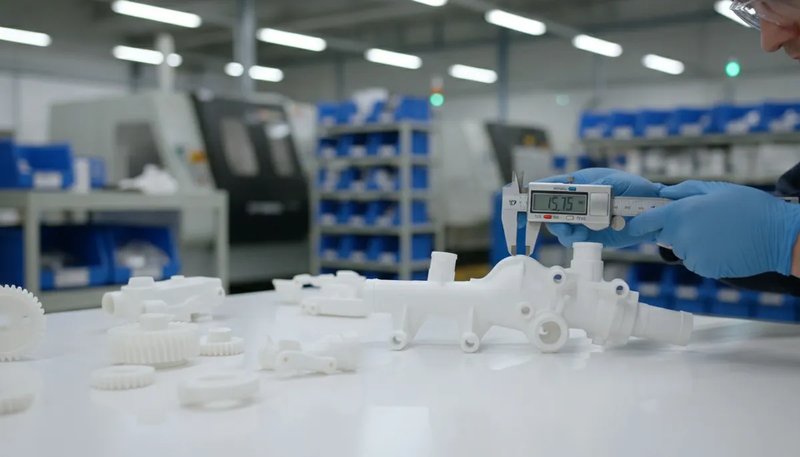
Quality inspection of injection molded parts.
On-Site Audit: 7 Critical Checkpoints
- Incoming Material Control — Verify that raw resin and metal stocks are inspected upon receipt. Look for material certificates, lot tracking labels, and a defined procedure for rejecting non-conforming material. The factory should be able to trace every batch of resin back to the supplier and the date it arrived.
- Mold Maintenance Program — Ask to see the mold maintenance log. A well-run shop documents every cleaning, component replacement, and resurfacing event with dates and cycle counts. Neglected molds produce flash, sink marks, and dimensional drift over time.
- Process Control — Check whether the factory records and locks critical process parameters such as melt temperature, injection pressure, holding time, and cooling time. Modern machines store shot-by-shot data; older equipment should at minimum use documented setup sheets per job.
- Measurement and Inspection — Tour the quality lab and confirm that dimensional checks are performed at a frequency matching your tolerance requirements. First-article, in-process, and final inspection stages should all be defined in the inspection plan.
When auditing our facility, we recommend requesting our live traceability demonstration: pick any finished part on the floor and we trace it back to resin lot, machine number, mold revision, and operator within 2 minutes — a real-world test no certificate can replace.
- Documentation System — Review how the factory stores quality records. Are SOPs version-controlled? Are engineering change orders tracked? A digital QMS is a strong signal of maturity.
- Traceability — Pick a finished part at random and ask the quality team to trace it back to the resin lot, mold revision, machine number, and operator. If they can do this within minutes, traceability is genuinely embedded in their process.
- Corrective and Preventive Action (CAPA) — Request a recent CAPA example. A capable factory can walk you through root-cause analysis, containment action, permanent fix, and verification step.
Must-Verify Equipment List
A mold factory’s measurement capabilities directly determine the tightest tolerances it can reliably hold. During the lab tour, confirm that the following instruments are present, calibrated, and actively used:
- Coordinate Measuring Machine (CMM) — Essential for complex 3D geometries and GD&T callouts. A bridge-type CMM with sub-3-micron repeatability is the industry benchmark.
- Optical Comparator / Profile Projector — Useful for 2D contour checks, thread profiles, and small features that are difficult to probe mechanically.
- Hardness Tester — Required to verify mold steel hardness after heat treatment. Both Rockwell and Vickers scales should be available.
- Moisture Analyzer — Hygroscopic resins such as nylon, polycarbonate, and PBT must be dried before molding. A moisture analyzer confirms dryer performance meets the resin manufacturer’s specification.
Document Requirements to Request
- PPAP (Production Part Approval Process) — Level 3 is typical for new molds; it bundles dimensional results, material certs, process flow, and capability studies into one package.
- FAI (First Article Inspection Report) — A ballooned drawing with measured values for every callout. This is your baseline; every future lot should be compared against it.
- Control Plan — Maps each process step to its characteristics, specifications, measurement method, sample size, and frequency.
- Process Flow Diagram — A visual map from raw material receipt through shipping. Cross-reference it with what you actually see on the shop floor.
Remote Audit Alternatives
When international travel is impractical, you can still gather meaningful quality data without visiting the factory:
- Live Video Tour — Schedule a video call and ask the factory to walk through each checkpoint in real time. Request to see running machines, the quality lab, and a recent CAPA file. Pre-recorded videos are acceptable for initial screening but should not replace a live walkthrough.
- Sample Evaluation — Order a paid sample or pilot run and perform dimensional, visual, and functional testing at your own facility or through an independent lab.
- Third-Party Inspection — Engage SGS, Bureau Veritas, or QIMA to conduct the audit on your behalf. They follow standardized checklists and provide photographic evidence. This is often the most cost-effective option for buyers using third-party quality audits when sourcing overseas for the first time via third-party quality audits3
Regardless of the method you choose, document your findings in a formal audit report and share it with the supplier. A transparent audit builds trust on both sides and creates a measurable baseline for continuous improvement.
B2B Sourcing Platforms for Injection Molding
B2B sourcing platforms connect buyers with thousands of mold shops in minutes — but the wrong platform, or the wrong filters, can waste months. This section compares the five largest platforms and explains how to use them as a starting point, not a final answer.
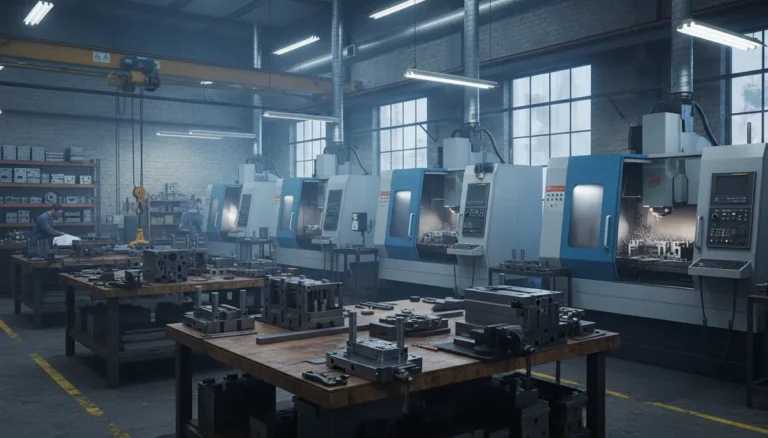
Rapid tooling workshop found via B2B platforms.
The Big Five: Platform Comparison
| Platform | Best For | Supplier Pool | Verification Level | Key Weakness |
|---|---|---|---|---|
| Alibaba | High-volume, budget-sensitive parts | 200K+ manufacturers | Verified Supplier / Trade Assurance | Gold status is paid, not earned |
| Made-in-China | Mid-range tooling, faster quoting | 50K+ suppliers | Audited Supplier program | Smaller English-language support |
| Global Sources | Electronics & consumer goods | 30K+ verified exhibitors | In-person verification | Higher MOQs, less custom molding |
| ThomasNet | US / North American domestic | 500K+ industrial companies | Self-reported certifications | Limited offshore options |
| Kompass | European & global enterprise | 10M+ company profiles | Company registration check | Thin injection molding specialization |
What Each Platform Actually Delivers
Alibaba dominates search volume and offers the largest pool of injection molding factories. Its Trade Assurance program covers order disputes, and the built-in messaging system makes RFQs fast. However, Gold Supplier status is a paid subscription — it confirms the company exists, not that it delivers quality. Always cross-reference with factory audits before committing tooling spend.
Made-in-China skews toward factories willing to compete on mid-volume tooling. Response rates tend to be higher than Alibaba for custom mold projects because the platform attracts fewer tire-kickers. The Audited Supplier badge requires a third-party site visit, which is more meaningful than a basic verification.
ZetarMold maintains verified supplier profiles on both Alibaba and Made-in-China. We are a Gold Supplier with Trade Assurance on Alibaba and an Audited Supplier on Made-in-China — both verified by third-party site visits. Our ISO 9001 certificate number and registrar contact are available on request.
Global Sources originated as a trade-show directory and still ties closely to physical exhibitions. For injection molding, it works best when your parts overlap with electronics enclosures or consumer-product housings.
ThomasNet is the go-to directory for sourcing within the United States and Canada. If lead time, IP security, or ITAR compliance matter more than unit price, start here. The trade-off: domestic mold builders charge 2–4× China pricing on tooling.
Kompass excels at mapping corporate structures across Europe, Asia, and the Americas. Use it to identify parent companies and subsidiaries before signing an NDA, or to find second-source factories operating under different names.
Why Gold Supplier ≠ Good Supplier
Every platform monetizes visibility. Suppliers who pay more appear higher in search results, regardless of their actual manufacturing capability. To filter effectively:
- Check response quality, not speed. A supplier who asks clarifying questions about draft angles, gate locations, or material certs is more valuable than one who quotes in two hours with a suspiciously low price.
- Request a process sheet. Legitimate mold shops can describe their equipment list (tonnage, CNC brand, EDM type) and provide photos of recent molds — not stock images.
- Verify certifications independently. Ask for ISO 9001 or IATF 16949 certificate numbers and confirm them through the issuing registrar’s website. Forged certificates are common on low-cost platforms.
- Order a sample mold or pilot run first. A $3,000 pilot mold tells you more about capability than a $100,000 RFQ response.
Beyond Platforms: Supplemental Sourcing Channels
- Trade shows — Chinaplas (Shanghai), NPE (Orlando), and Fakuma (Germany) let you meet factory owners, inspect sample parts, and negotiate face-to-face.
- Industry referrals — Ask your material supplier (e.g., Dow, SABIC) for mold shop recommendations. Resin distributors know which factories run consistent processes.
- LinkedIn and industry forums — Mold-making communities on LinkedIn and specialized forums connect you with engineers who can recommend shops they have personally used.
Practical Workflow
Use B2B platforms for discovery, not for final selection. Shortlist 8–10 suppliers across at least two platforms, send identical RFQs, compare first-response quality, then narrow to 3 finalists for factory audits. This staged approach prevents the most common sourcing mistake: committing tooling budget to the first supplier that replies.
Industry-Specific Sourcing Requirements
Not all injection molding suppliers are created equal. A factory that excels at consumer-goods housings may lack the cleanroom infrastructure or certification depth that regulated industries demand. Understanding industry-specific injection molding requirements before you shortlist suppliers saves months of requalification and avoids costly compliance gaps.
Requirements at a Glance
| Industry | Key Standards | Typical Materials | Tolerance Range | Audit Focus |
|---|---|---|---|---|
| Automotive | IATF 16949, PPAP, APQP | PA6/66, PBT, POM, TPE | ±0.05 – ±0.10 mm | Process capability (Cpk ≥ 1.67), FMEA, traceability, run@rate |
| Medical | ISO 13485, FDA 21 CFR 820, USP Class VI | PEEK, PC, LSR, PP, ABS-Med | ±0.02 – ±0.08 mm | Cleanroom (ISO 7/8), validation (IQ/OQ/PQ), bioburden control, DHR |
| Electronics | UL 94, RoHS, REACH, IPC | PBT, LCP, PPS, PC/ABS | ±0.03 – ±0.10 mm | Flammability testing, RoHS declarations, CTI tracking, ESD controls |
| Consumer | ISO 9001, CPSIA, CA Prop 65 | ABS, PP, HIPS, TPU, PC | ±0.10 – ±0.25 mm | Cosmetic inspection, lead-time reliability, cost control, regulatory declarations |
| Aerospace | AS9100, NADCAP, ASTM standards | PEEK, PEI (Ultem), PPSU, PTFE | ±0.01 – ±0.05 mm | First-article inspection (AS9102), material cert traceability, NADCAP accreditation |
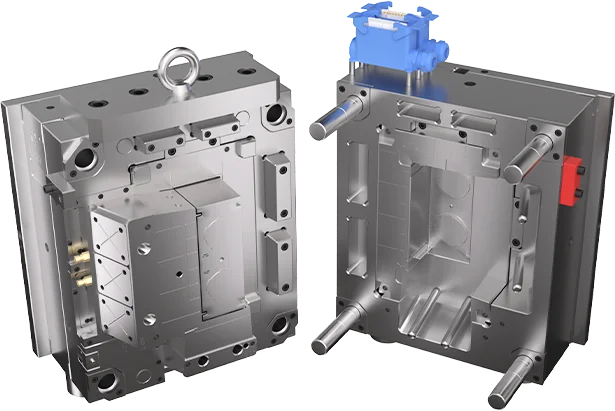
Industry-grade injection molding equipment.
Automotive: IATF 16949 and PPAP Discipline
Automotive OEMs require IATF 16949 as a non-negotiable baseline. Suppliers must demonstrate competence in PPAP and APQP, submitting dimensional reports, material certificates, and capability studies (Cpk ≥ 1.67 for critical dimensions) before volume production. Material selection favors engineering thermoplastics — glass-filled PA6 for structural brackets, POM for snap-fits, TPE overmolds for seals. Full lot traceability and just-in-sequence delivery capability are equally important.
Medical: ISO 13485 and FDA Compliance
Medical device molding eliminates most general-purpose factories. ISO 13485 is the minimum entry requirement; for the U.S. market, FDA 21 CFR Part 820 compliance is also mandatory — meaning validated processes, Device History Records (DHRs), and documented corrective-action procedures. Cleanroom molding (ISO Class 7 or 8) is required for invasive components, and materials must meet USP Class VI or ISO 10993 biocompatibility standards. Process validation (IQ/OQ/PQ) typically runs 4–12 weeks and must be repeated for any significant change. Expect FDA-compliant process validation timelines 2–3× longer than consumer projects per medical qualification standards4
Electronics: Flammability and Environmental Compliance
Electronic enclosures and connectors require UL 94 flammability ratings (V-0 through V-2) plus RoHS and REACH substance restrictions. High-performance materials like LCP and PPS are preferred for tight-tolerance connectors with high-temperature soldering resistance. Suppliers should maintain updated RoHS declarations per resin lot and have documented CTI tracking and ESD controls in the molding area.
Consumer Products: Speed and Cost Optimization
Consumer sourcing prioritizes cost efficiency, fast lead times, and surface-finish quality. ISO 9001 provides a solid baseline, but the real differentiator is efficient multi-cavity production with cosmetic-grade consistency. Regulatory focus centers on CPSIA (children’s products) and state-level restrictions like California Prop 65. Tolerances are the most generous of the five verticals, but cosmetic standards — Class A surfaces, zero sink marks, batch-to-batch color consistency — are often the strictest.
Aerospace: AS9100 and NADCAP Rigor
Aerospace represents the highest barrier to entry. AS9100 certification is required, and special processes need NADCAP accreditation. First-article inspection follows AS9102 with full dimensional, material, and process verification. High-performance polymers (PEEK, Ultem, PPSU) dominate due to flame, smoke, and toxicity (FST) requirements. Tolerances are the tightest across all verticals, and full material-lot traceability must be retained for the life of the aircraft program.
Cross-Industry Supplier Strategy
When your product spans multiple verticals — a medical device with electronic sub-assemblies, for instance — you face a strategic choice: single-source supplier vs. specialized multi-supplier network.
- Single-source advantages: consolidated program management, unified quality system, lower tooling costs through volume leverage. Best when one supplier holds certifications across all relevant standards.
- Multi-supplier advantages: each partner is purpose-built for its vertical, yielding deeper compliance and risk diversification.
For most OEMs the hybrid approach wins: qualify one primary supplier meeting your most stringent requirement, then validate one or two backups for supply-chain resilience. Align qualification timelines with product milestones — audits, sample submissions, and validations can add 8–16 weeks to automotive or medical sourcing.
Total Cost of Ownership Calculator
Most sourcing teams compare quotes on piece price alone. That number looks decisive — until you add freight, tariffs, quality failures, and the time your engineers spend bridging a 12-hour time gap. The injection molding total cost of ownership (TCO) reveals the real economics behind your supplier choice.

Cost planning for total ownership analysis.
The Seven Cost Buckets
Every injection molding program carries costs that fall into seven categories. Missing even one distorts your comparison.
- Tooling — mold design, machining, sampling, and modifications. A Class 101 mold in China may list at $12,000–$25,000; the same spec domestically runs $30,000–$55,000.
- Per-Part Price — material, machine time, labor, and overhead baked into the quoted unit cost.
- Shipping & Freight — ocean, air, or ground logistics plus insurance and customs brokerage. A 10,000-part shipment from Shenzhen to Chicago adds roughly $0.35–$0.80 per unit by sea; air freight triples that.
- Tariffs & Duties — as of 2026, many plastic articles from China carry a 25% additional duty on top of the standard HTS rate per Section 301 rules5 That alone can erase a 30% piece-price advantage.
- Quality Costs — rejects, sorting, rework, warranty claims, and the labor to manage corrective actions. Industry data places scrap and rework at 2–5% of production value for offshore programs, versus under 1% for well-managed domestic runs.
- Inventory Carrying Cost — larger batch sizes and longer lead times mean more safety stock. At a 15% annual carrying rate, holding $40,000 of buffer inventory costs $6,000 per year.
- Communication Overhead — engineering time spent on clarifications, video calls at odd hours, and rework loops caused by specification misunderstandings. Most teams underestimate this by half.
A Simple TCO Formula
You do not need a complex spreadsheet to get started. Plug your real numbers into this framework:
TCO Formula: TCO = Tooling + (Per-Part × Volume × Years) + (Freight × Shipments × Years) + (Tariff % × Declared Value) + Quality Scrap + Inventory Carrying + Communication Hours × Rate
The key insight is not precision — it is completeness. Even a rough estimate that includes all seven buckets gives you a more accurate picture than a quote comparison on unit price alone.
Example: 10K Parts/Year, China vs. U.S., 3-Year Horizon
Consider a mid-complexity ABS housing, 150 g shot weight, Class 102 mold, 10,000 units per year for three years:
| Cost Bucket | China Supplier | U.S. Supplier |
|---|---|---|
| Tooling | $18,000 | $42,000 |
| Per-Part (× 30,000) | $0.90 × 30K = $27,000 | $1.60 × 30K = $48,000 |
| Freight (30 shipments) | $4,500 | $1,800 |
| Tariffs (25% on parts) | $6,750 | $0 |
| Quality Scrap (3% vs 0.5%) | $2,700 | $450 |
| Inventory Carrying (3 yrs) | $5,400 | $1,200 |
| Communication Overhead | $4,500 | $900 |
| 3-Year TCO | $69,850 | $95,350 |
In this scenario the China source saves roughly 27%. But change one variable — raise tariffs, double the communication hours, or add a single emergency air shipment — and the gap narrows fast.
Hidden Costs Most Teams Miss
- Mold Maintenance — a Class 102 mold needs resurfacing every 100,000–150,000 cycles. Budget $1,500–$3,000 per maintenance event, plus downtime.
- Design Iteration — first-article revisions average 1.5 rounds offshore versus 0.7 domestically. Each round adds $500–$2,000 in engineering time and two to four weeks of delay.
- Travel for Audit — an on-site visit to a Chinese factory costs $3,000–$6,000 including flights, hotels, and time. Two visits per year is standard for critical programs.
- Currency Risk — a 5% shift in the USD/CNY rate can wipe out a year of savings on a $200,000 program. If your contract does not lock exchange rates, model a ±5% sensitivity band.
When to Choose Nearshore or Domestic
If your TCO comparison shows a gap of less than 15% between offshore and domestic or nearshore options, choose the closer source. A sub-15% savings margin is easily consumed by a single quality incident, a tariff change, or a schedule slip. The faster lead times, easier communication, and lower inventory risk of a nearby supplier deliver value that compounds with every reorder.
Use the formula above with your own numbers. The exercise takes under an hour and often changes which supplier looks best on paper — because the cheapest piece price does not always produce the lowest injection molding total cost of ownership.
Frequently Asked Questions
How do I find a reliable injection molding supplier in China?
Start with B2B platforms (Alibaba, Made-in-China) to build a shortlist of 5–8 candidates, then verify through facility audits, ISO certification checks with the issuing registrar, and reference calls to companies in your industry. Request T0 samples, run a small trial order, and evaluate communication responsiveness before committing to production tooling. A supplier that passes a third-party SGS or Bureau Veritas audit and provides strong industry references is your most reliable starting point.
What is the typical lead time for injection mold tooling?
Standard single-cavity mold tooling in China takes 4–8 weeks from PO to T0 samples. Multi-cavity production molds can take 8–14 weeks. Domestically (US/Europe), expect 8–16 weeks for comparable tools. Always build in an additional 2–4 weeks for T1 sample review and any required mold modifications. Complex molds with side actions, hot runners, or tight surface-finish requirements add further time.
How much does an injection mold cost?
Costs range from $1,000–$3,500 for simple single-cavity aluminum prototype molds to over $80,000 for complex multi-cavity production molds in H13 steel. In China, typical 4-cavity production molds for mid-complexity parts cost $8,000–$20,000. Equivalent US molds run $25,000–$55,000. Key cost drivers include cavity count, steel grade (P20 vs. H13), number of side actions, surface finish specification (SPI grade), and whether DFM iterations are included.
What certifications should an injection molding supplier have?
At minimum, ISO 9001 — any legitimate mold shop should hold this. For automotive parts, require IATF 16949. For medical device components, ISO 13485 and FDA registration are mandatory. Aerospace requires AS9100 and often NADCAP for special processes. Always verify certificates directly with the issuing registrar body (not just by looking at a PDF), and check that the certificate is current and covers your specific product category.
Should I sign an NDA before sharing my design with a supplier?
Yes, always — and ideally register a CNIPA design patent in China before sharing any CAD files. Use a bilingual English-Chinese NDA with specific penalty clauses, Chinese jurisdiction, and a clear definition of what constitutes confidential information. Verbal NDAs and English-only documents are very difficult to enforce in Chinese courts. Combining a registered patent, a properly drafted bilingual NDA, and watermarked files provides layered protection against design copying.
What payment terms are standard for injection molding?
The most common structure is 30/30/40: 30% deposit, 30% after T1 sample approval, 40% before production shipment. For large tooling projects, suppliers may request 50/50. Letter of Credit (L/C) is recommended for first-time orders over $10,000 with unknown suppliers — the bank fee (0.5–1.5%) is worth the security. Net-30 or Net-60 production terms are typically available only after 3+ on-time payment cycles with an established supplier relationship.
How do I protect mold ownership when sourcing overseas?
Include explicit mold ownership clauses in your purchase agreement specifying: legal title transfers to buyer upon full payment, the mold’s serial number and cavity count, storage and maintenance responsibilities, your right to transfer the mold to another supplier (with capped transfer fees), and prohibition on unauthorized modifications. For China sourcing, consider filing a security interest with the local Administration for Industry and Commerce (AIC) to establish priority claim status. Never rely on verbal agreements for mold ownership.
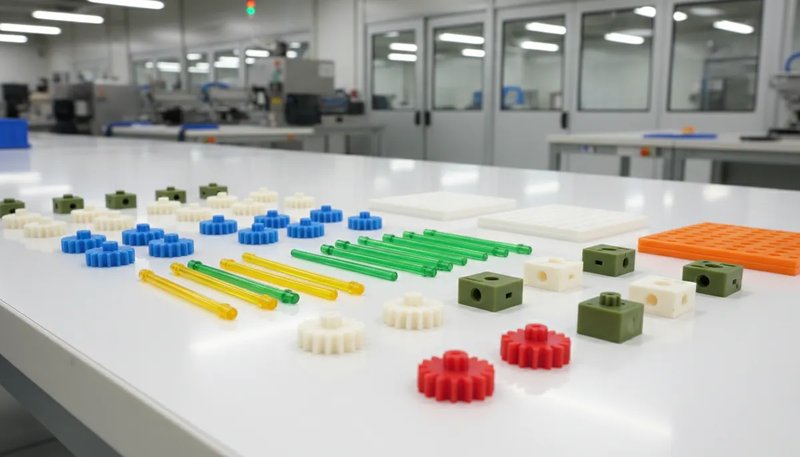
Production batch of injection molded parts.
ZetarMold has helped hundreds of companies navigate the injection molding sourcing process — from initial RFQ through volume production. Our team provides free DFM analysis, transparent tooling quotes, and ISO 9001-certified production across 45 injection molding machines. Contact us today to discuss your project requirements and receive a detailed quote within 24 hours.
- Complete Guide to Injection Molding — ZetarMold
- Injection Mold Design Reference — ZetarMold
- ISO 9001:2015 Quality Management Systems — ISO
- IATF 16949 Automotive Quality Management — IATF Global Oversight
China National Intellectual Property Administration (CNIPA) design patents filed before sharing CAD files with any supplier are the most cost-effective IP protection measure available for overseas manufacturing. Current filing fees for foreign applicants range from $500–$1,500 USD including agent fees, with typical grant timelines of 4–8 months.↩
Letter of Credit (L/C) transaction fees vary by bank and L/C type. Documentary L/Cs (most common for manufacturing) typically carry issuing fees of 0.5–1.5% of the transaction value plus amendment and advising fees. SWIFT L/Cs offer the strongest protection for first-time high-value transactions with overseas suppliers.↩
Third-party inspection firms such as SGS, Bureau Veritas, and QIMA offer standardized factory audit programs for manufacturing facilities in China. Audit costs typically range from $800–$2,500 for a one-day factory assessment, including a written report with photographic evidence and a corrective action request summary.↩
FDA 21 CFR Part 820 Quality System Regulation requires medical device manufacturers and their contract manufacturers to implement validated processes, maintain Device History Records (DHRs), and demonstrate ongoing process control. Process validation (IQ/OQ/PQ) for a new injection molding program typically requires 12–24 weeks of documentation and testing before commercial release.↩
US-China Section 301 tariffs on plastic articles (HTS Chapter 39) have ranged from 7.5% to 25% since their introduction in 2018. As of 2026, most injection-molded plastic parts (HTS 3926.90) remain subject to 25% additional duties on top of the standard Most Favored Nation (MFN) rate of 3.5–5.3%, making landed-cost calculations essential for any offshore sourcing decision.↩
Need a Quote for Your Injection Molding Project?
Get competitive pricing, DFM feedback, and production timeline from ZetarMold’s engineering team.